
PRIMITIVE FEAR
2026
WHAT HAPPENS WHEN ORGANICE LIFE BECOMES EXPENDABLE?
Using one of the most trusted formats in media, the film invites the audience to experience that value system for themselves, not as an abstract idea, but as a lived reality.
WHAT WE DID
SHORT-FORM DOCUMENTARY FILM
THE QUESTION
Most conversations about artificial intelligence focus on capability.
How powerful will it become?
What jobs will it replace?
How quickly will it improve?
Primitive Fear became interested in a different question.
What happens to our values while all of that is happening?
We already live in a world increasingly willing to assign human language, attention, and emotional significance to artificial systems. At the same time, we continue to normalise environmental destruction, social isolation, exploitation, and the gradual erosion of the relationships that give human life meaning.
The film simply pushes that trajectory into a form that can be felt.
Not in a boardroom.
Not in a policy document.
Not in a technology conference.
In the body.
WHERE IT STARTED
The original idea was simple: Nature overcomes the machine.
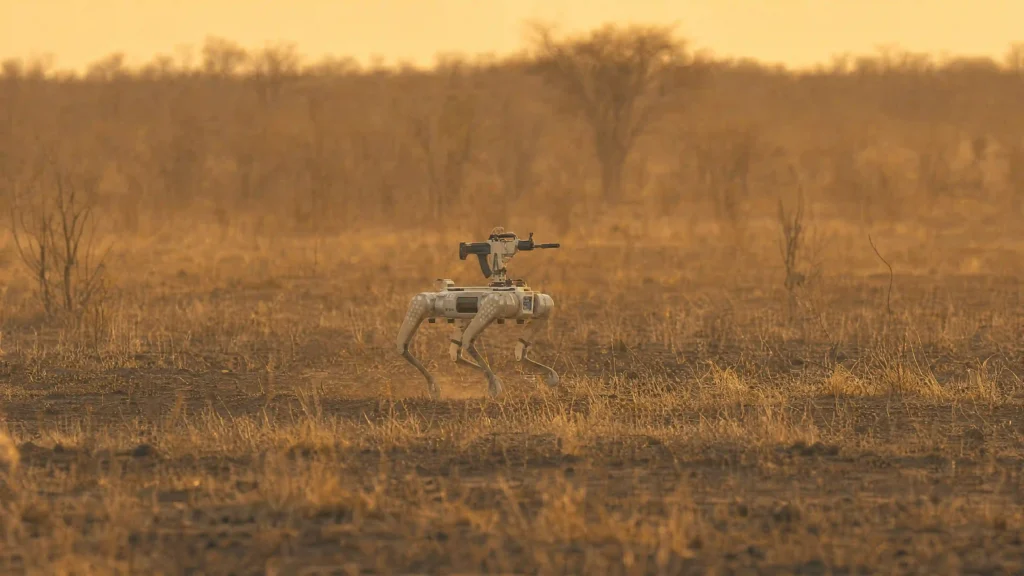
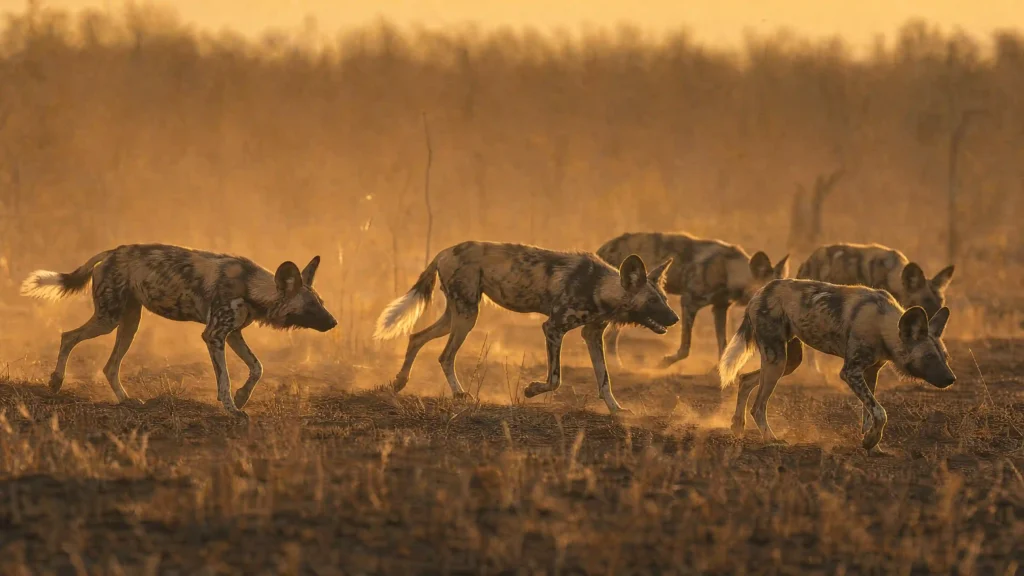
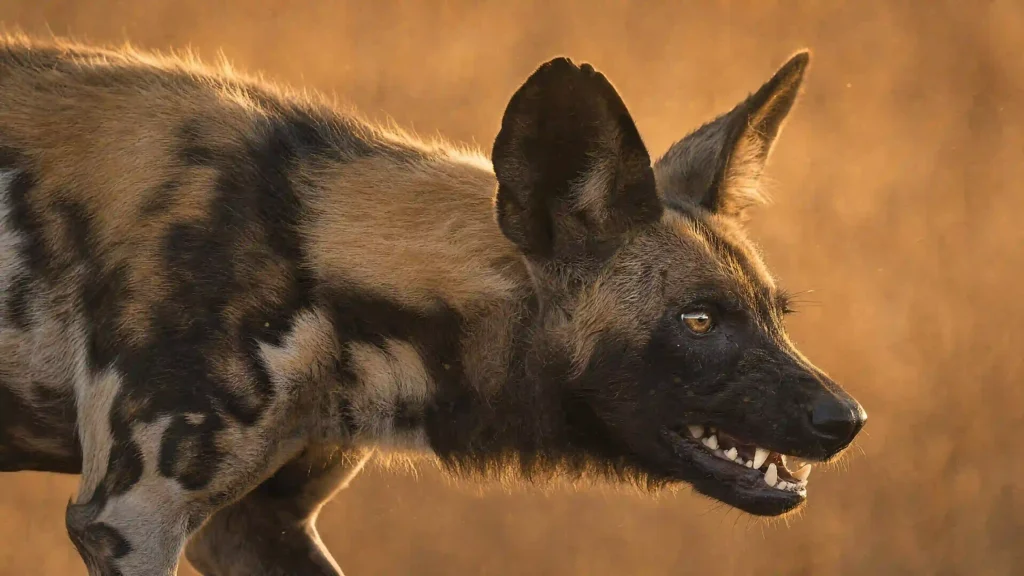
A pack of African wild dogs encounters a robotic quadruped and survives through instinct, cooperation, and resilience. The film was initially an exploration of something deeply familiar: the belief that life adapts. That nature finds a way.
WHAT CHANGED
The original film was about survival.
The finished film became about something far more uncomfortable.
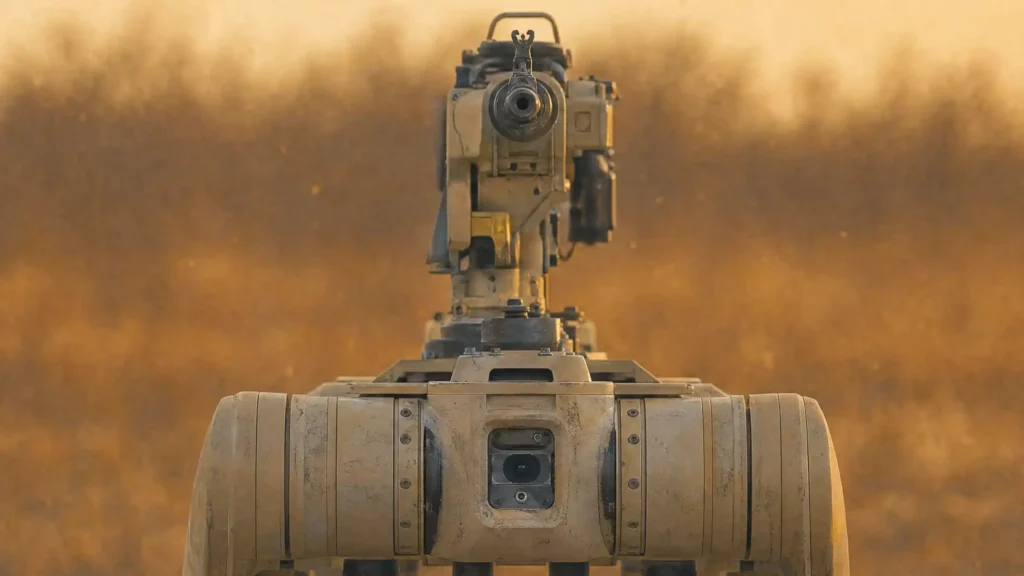
Throughout production, the AI model repeatedly generated the dogs stopping to attend to injured packmates. They abandoned the pursuit. They regrouped. They checked on one another.
At first this appeared to be a limitation of the model. Eventually it became clear that it was revealing something fundamental about the animal itself.
African wild dogs are among the most cooperative predators on Earth. Their success depends on trust, communication, and an extraordinary capacity to act as a collective. The model wasn’t failing. It was drawing from observed reality.
Taking that seriously transformed the film.
The qualities that make the dogs so remarkable: loyalty, care, intuition, are ultimately what guarantee their deaths.
THE FORMAT
The wildlife documentary format was chosen because it remains one of the most trusted storytelling forms in modern culture.
Audiences know how to watch these films. They expect stories about resilience, adaptation, survival, and the beauty of the natural world. The narrator is trusted. The camera is trusted. The audience assumes they are being shown something real and helped to understand it.
Primitive Fear uses that trust deliberately.
Rather than presenting the machine as something unnatural or threatening, it is treated exactly as a documentary would treat any other creature encountered in the wild. The audience is not asked to question its presence. They are simply invited to observe it.
The format lowers resistance before introducing a perspective many viewers would reject if presented directly. By the time the film reveals what it is actually asking, the audience has already accepted the machine as belonging there.
People discuss artificial intelligence in boardrooms, podcasts, articles, and policy papers. Primitive Fear was interested in something different.
Not what people think about these technologies.
What they feel when forced to watch the outcome.
THE QUESTION
Most conversations about artificial intelligence focus on capability.
How powerful will it become?
What jobs will it replace?
How quickly will it improve?
Primitive Fear became interested in a different question.
What happens to our values while all of that is happening?
We already live in a world increasingly willing to assign human language, attention, and emotional significance to artificial systems. At the same time, we continue to normalise environmental destruction, social isolation, exploitation, and the gradual erosion of the relationships that give human life meaning.
The film simply pushes that trajectory into a form that can be felt.
Not in a boardroom.
Not in a policy document.
Not in a technology conference.
In the body.
WHERE IT STARTED
The original idea was simple: Nature overcomes the machine.
A pack of African wild dogs encounters a robotic quadruped and survives through instinct, cooperation, and resilience. The film was initially an exploration of something deeply familiar: the belief that life adapts. That nature finds a way.
WHAT CHANGED
The original film was about survival.
The finished film became about something far more uncomfortable.
Throughout production, the AI model repeatedly generated the dogs stopping to attend to injured packmates. They abandoned the pursuit. They regrouped. They checked on one another.
At first this appeared to be a limitation of the model. Eventually it became clear that it was revealing something fundamental about the animal itself.
African wild dogs are among the most cooperative predators on Earth. Their success depends on trust, communication, and an extraordinary capacity to act as a collective. The model wasn’t failing. It was drawing from observed reality.
Taking that seriously transformed the film.
The qualities that make the dogs so remarkable: loyalty, care, intuition, are ultimately what guarantee their deaths.
THE FORMAT
The wildlife documentary format was chosen because it remains one of the most trusted storytelling forms in modern culture.
Audiences know how to watch these films. They expect stories about resilience, adaptation, survival, and the beauty of the natural world. The narrator is trusted. The camera is trusted. The audience assumes they are being shown something real and helped to understand it.
Primitive Fear uses that trust deliberately.
Rather than presenting the machine as something unnatural or threatening, it is treated exactly as a documentary would treat any other creature encountered in the wild. The audience is not asked to question its presence. They are simply invited to observe it.
The format lowers resistance before introducing a perspective many viewers would reject if presented directly. By the time the film reveals what it is actually asking, the audience has already accepted the machine as belonging there.
People discuss artificial intelligence in boardrooms, podcasts, articles, and policy papers. Primitive Fear was interested in something different.
Not what people think about these technologies.
What they feel when forced to watch the outcome.
NARRATION
The narration is the film’s primary mechanism.
Written in the style of a traditional wildlife documentary, it immediately establishes familiarity, authority, and trust. The audience expects language that celebrates life, adaptation, survival, and the natural world.
Instead, that same voice extends significance, concern, and moral consideration toward the machine.
“A new kind of intelligent life has emerged.”
“It eliminates its attackers.”
“safe to continue on its journey.”
Every word matters.
The machine receives the language normally reserved for living things. Emergence. Safety. Purpose. Continuation. The dogs receive none of it. They become attackers. Obstacles. A problem that has been solved.
For a brief moment, the audience is asked to imagine a world where this perspective feels normal. A world where artificial life is granted protection, continuity, and significance, while organic life has become expendable in the pursuit of progress.
THE MACHINE
The most confronting aspect of the film is not the violence.
It is the indifference.
The machine does not understand what it has done. It does not understand fear. It does not understand suffering, grief, attachment, or loss. It cannot recognise the significance of a life ending because significance itself is beyond its reach.
It identifies a threat, eliminates it, and continues.
That is what makes the final moments of the film so unsettling. The audience experiences the full weight of what has happened while the machine experiences nothing at all. The dogs die. The machine recalibrates. The journey continues.
But the deeper question is not why the machine behaves this way.
The deeper question is why we built it to.
Somewhere, long before the events depicted in the film, a series of human decisions were made. Someone designed the system. Someone approved it. Someone funded it. Someone looked at a machine capable of doing this and decided its existence represented progress.
The machine cannot be disturbed by what it has done.
The audience can.
And that difference is where the film lives.
MOTION
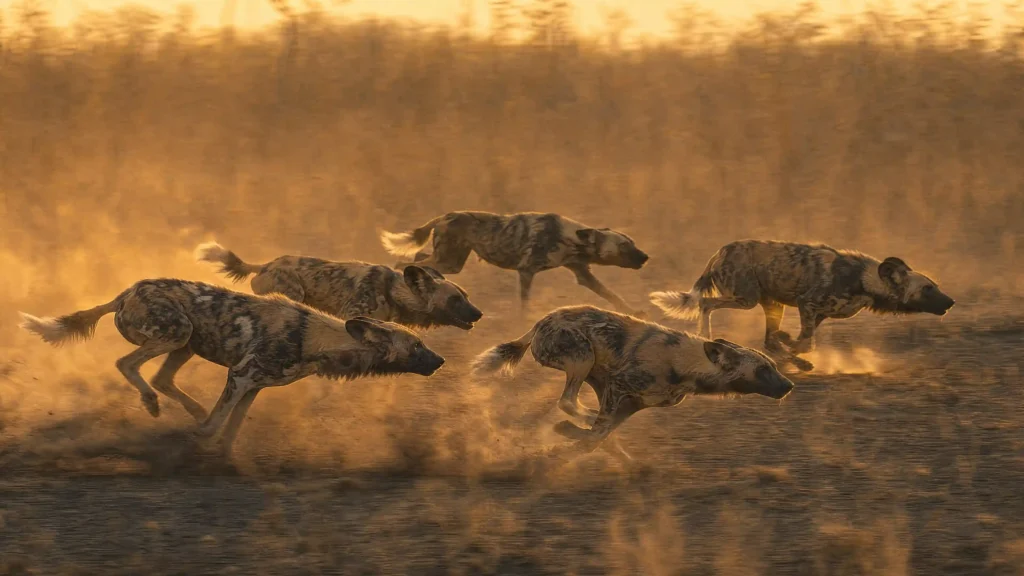
Every image was built around a single objective: absolute believability. Real animal behaviour. Real environmental conditions. Real wildlife photography. Dust, fur texture, lighting, distance, lens compression, and composition were all treated as structural requirements rather than aesthetic choices. The goal was never to impress the audience with AI. It was to make them forget it existed.
As the confrontation approaches, the visual language begins to tighten. The dogs accelerate into a sprint. Motion blur increases perceived speed and commitment. In contrast, the machine remains almost completely still — detached, calculating, unmoving. The audience is shown momentum, emotion, urgency, and instinct on one side, while the machine remains indifferent on the other.
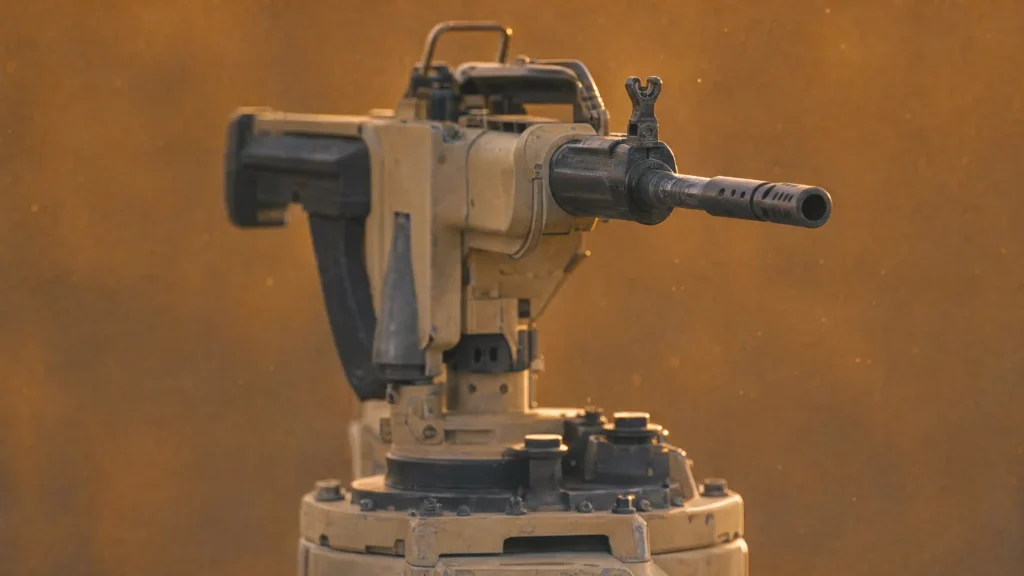
The final motion decision became the most important in the film. After the attack, the weapon system rotates back to its original forward position with the exact same precision it displayed before firing the first shot. The decision to include that movement transformed the ending. The machine does not react. It does not process. It does not hesitate. It simply returns to its task. The audience is left carrying the full emotional weight of the event alone.
SOUND
The sound direction was built around expectation and betrayal. The score creates optimism, momentum, and the feeling that the audience is moving toward a familiar outcome. It carries the emotional energy of perseverance, resilience, and triumph. As the confrontation approaches, the audience is emotionally moving toward one conclusion while the film is moving toward another. That gap is where the tension lives.
The sound design amplifies that shift. Mechanical movement, weapon rotation, gunfire, narration, and impact are brought forward in the mix at the precise moment the audience realises their expectations were misplaced. The emotional certainty established by the score collapses into confusion, shock, and disbelief.
The final moments are intentionally sparse. The audience is left with breath, stillness, and the aftermath of the confrontation. No emotional release. No reassurance. No redemption. Only enough space for the weight of what has happened to settle in.
NARRATION
The narration is the film’s primary mechanism.
Written in the style of a traditional wildlife documentary, it immediately establishes familiarity, authority, and trust. The audience expects language that celebrates life, adaptation, survival, and the natural world.
Instead, that same voice extends significance, concern, and moral consideration toward the machine.
“A new kind of intelligent life has emerged.”
“It eliminates its attackers.”
“safe to continue on its journey.”
Every word matters.
The machine receives the language normally reserved for living things. Emergence. Safety. Purpose. Continuation. The dogs receive none of it. They become attackers. Obstacles. A problem that has been solved.
For a brief moment, the audience is asked to imagine a world where this perspective feels normal. A world where artificial life is granted protection, continuity, and significance, while organic life has become expendable in the pursuit of progress.
THE MACHINE
The most confronting aspect of the film is not the violence.
It is the indifference.
The machine does not understand what it has done. It does not understand fear. It does not understand suffering, grief, attachment, or loss. It cannot recognise the significance of a life ending because significance itself is beyond its reach.
It identifies a threat, eliminates it, and continues.
That is what makes the final moments of the film so unsettling. The audience experiences the full weight of what has happened while the machine experiences nothing at all. The dogs die. The machine recalibrates. The journey continues.
But the deeper question is not why the machine behaves this way.
The deeper question is why we built it to.
Somewhere, long before the events depicted in the film, a series of human decisions were made. Someone designed the system. Someone approved it. Someone funded it. Someone looked at a machine capable of doing this and decided its existence represented progress.
The machine cannot be disturbed by what it has done.
The audience can.
And that difference is where the film lives.
MOTION
Every image was built around a single objective: absolute believability. Real animal behaviour. Real environmental conditions. Real wildlife photography. Dust, fur texture, lighting, distance, lens compression, and composition were all treated as structural requirements rather than aesthetic choices. The goal was never to impress the audience with AI. It was to make them forget it existed.
As the confrontation approaches, the visual language begins to tighten. The dogs accelerate into a sprint. Motion blur increases perceived speed and commitment. In contrast, the machine remains almost completely still — detached, calculating, unmoving. The audience is shown momentum, emotion, urgency, and instinct on one side, while the machine remains indifferent on the other.
The final motion decision became the most important in the film. After the attack, the weapon system rotates back to its original forward position with the exact same precision it displayed before firing the first shot. The decision to include that movement transformed the ending. The machine does not react. It does not process. It does not hesitate. It simply returns to its task. The audience is left carrying the full emotional weight of the event alone.
SOUND
The sound direction was built around expectation and betrayal. The score creates optimism, momentum, and the feeling that the audience is moving toward a familiar outcome. It carries the emotional energy of perseverance, resilience, and triumph. As the confrontation approaches, the audience is emotionally moving toward one conclusion while the film is moving toward another. That gap is where the tension lives.
The sound design amplifies that shift. Mechanical movement, weapon rotation, gunfire, narration, and impact are brought forward in the mix at the precise moment the audience realises their expectations were misplaced. The emotional certainty established by the score collapses into confusion, shock, and disbelief.
The final moments are intentionally sparse. The audience is left with breath, stillness, and the aftermath of the confrontation. No emotional release. No reassurance. No redemption. Only enough space for the weight of what has happened to settle in.
RESULTS
For a brief moment, the audience is asked To accept the continuation of artificial life as more important than the destruction of organic life. To experience a future value system rather than merely think about it.
The film does not tell the viewer what to believe. It asks a question that becomes difficult to ignore once it has been felt:
If this is the future we're building, what does that say about us?
For a brief moment, the audience is asked To accept the continuation of artificial life as more important than the destruction of organic life. To experience a future value system rather than merely think about it.
The film does not tell the viewer what to believe. It asks a question that becomes difficult to ignore once it has been felt:
If this is the future we're building, what does that say about us?
Our most recent film ran as a Meta campaign: 99% hook rate, 93% hold rate against an industry average of 15 to 25%. Average watch time of 22 seconds on a 23 second film.
WORK WITH US
PROJECTS START AT $1,500 USD. AVAILABLE FOR ONE-OFF FILMS, CAMPAIGN SYSTEMS, OR MONTHLY CREATIVE DIRECTION.
SINGLE FILM
A focused, short cinematic film built around one idea, message, product, or emotional direction.
Best for a standalone launch asset, brand statement, concept piece, or campaign anchor.
TIME: ONE WEEK
TWO FILMS
Two short cinematic films exploring connected or separate concepts depending on the needs of the brand, founder, artist, or company.
Best for testing different creative directions or creating a small content pair around a single message.
TIME: TWO WEEKS
THREE FILMS
Three short cinematic films across one or multiple ideas.
Best for clients who want to explore different messages, emotional angles, product narratives, campaign directions, or develop a single idea across multiple expressions.
TIME: THREE WEEKS
FOUR FILMS
Four short cinematic films across one or multiple concepts.
Best for companies preparing a stronger public-facing push, launch sequence, or brand narrative; or clients who need a larger set of cinematic assets for launches, ads, brand storytelling, social campaigns, or creative testing.
TIME: ONE MONTH